I identified government R&D opportunities, led the technical proposals that won $1.45M in DoD and NASA contracts, and developed engineering software and analyses for government and commercial customers. I’m also a co-founder and Berkeley Haas MBA candidate, focused on what it takes for promising defense and dual-use technology to move from R&D into adoption and scale.

Abhinav Sharma
  • Business development and customer engagement in aerospace
  • Army STTR taken from Phase I to Phase II
  • Rotorcraft, fixed-wing, UAVs, and advanced air mobility
  • Aerospace PhD, Berkeley Haas MBA ’28

Selected projects

Government and commercial work, from proposal to delivery

U.S. Army STTR · Phase I to Phase II · 2022–2025

Adaptive Aircraft Design and Optimization

I identified the opportunity, led the technical proposals end to end, and assembled and led a six-person industry–academic team with Prof. Joaquim Martins of the University of Michigan. Through customer engagement and iteration with Army Research Laboratory researchers, I guided the technical work and developed the Python optimization framework for morphing UAVs, aircraft whose wings change shape in flight, while Prof. Martins’s group developed their own software. We delivered the framework to ARL for its morphing-aircraft research, and the program advanced from a ~$173K Phase I to a ~$1.15M Phase II.

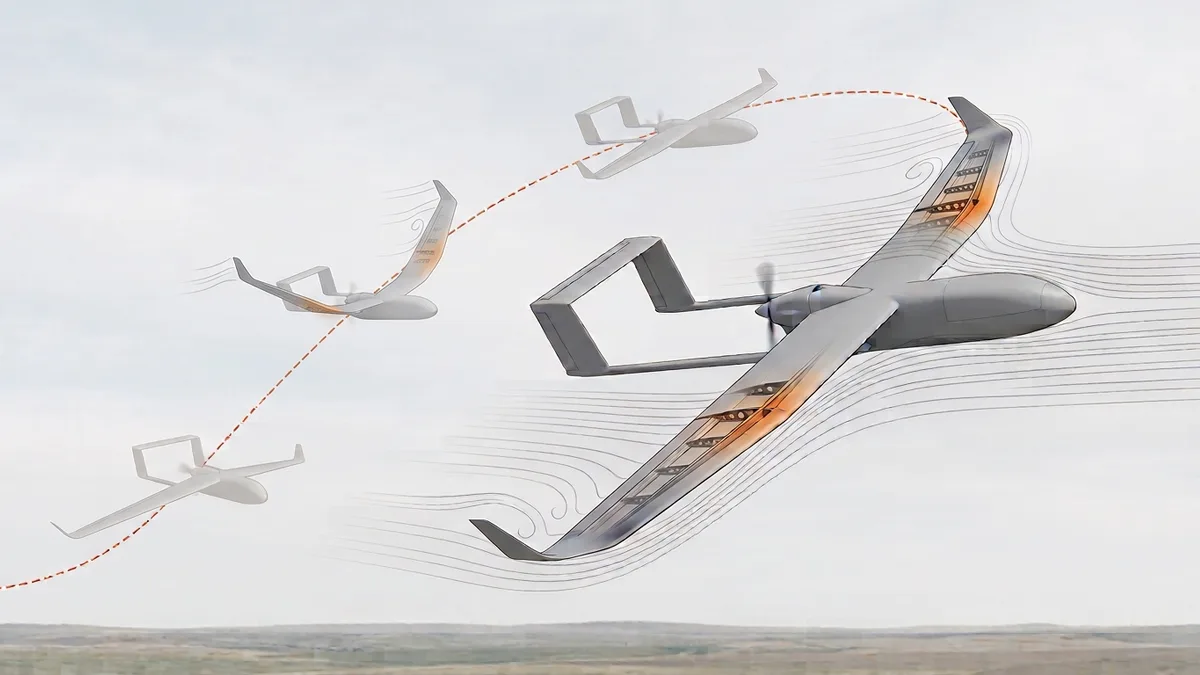
AI-generated illustration of a twin-boom morphing UAV with ghost images of alternate wing shapes along a dashed orange trajectory.
AI-generated illustration of a morphing-wing UAV whose trajectory and structure are optimized together. Not a specific aircraft.

NASA SBIR Phase I · 2021

Designing the Aircraft and the Controller Together

Designers often address flight-control requirements after the airframe is largely fixed. I led the technical proposal that won this competitive NASA SBIR Phase I (~$125K) and carried out the technical work: treating flight controls as part of the design from the start, using multidisciplinary design optimization (MDO) for an aircraft with distributed electric propulsion (DEP). We published it with Prof. Joaquim Martins and Jeffrey Keller.

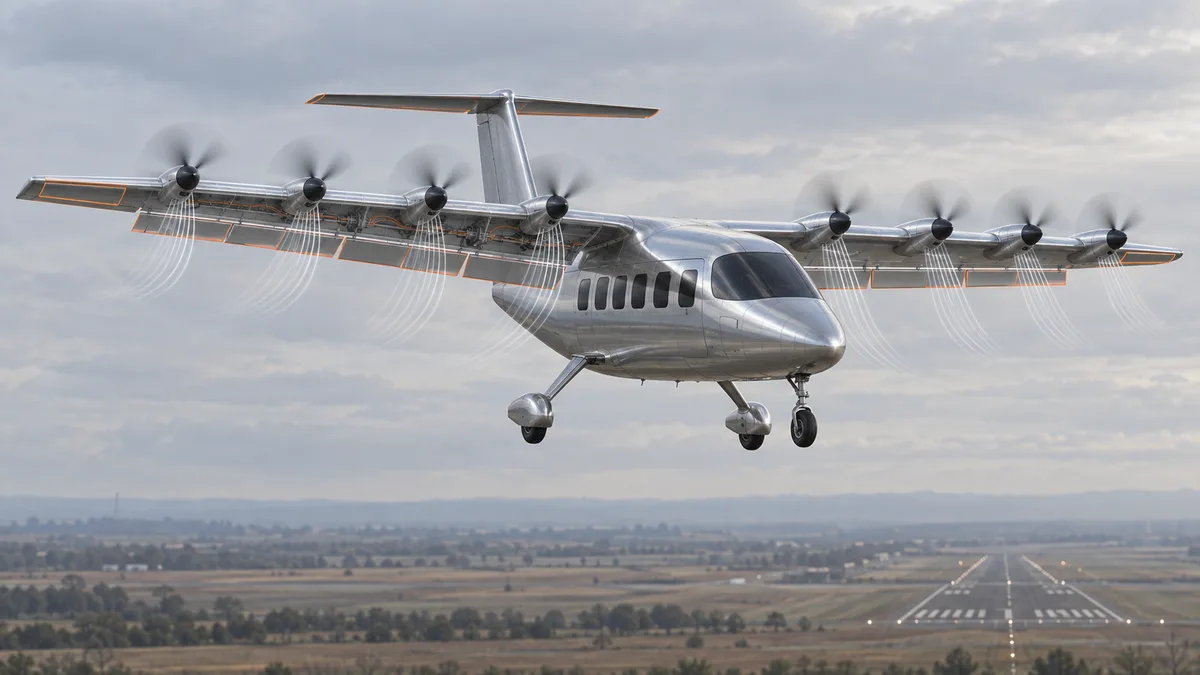
AI-generated illustration of a distributed electric propulsion aircraft on approach, with eight leading-edge propellers and white slipstream lines over the wing.
AI-generated illustration of a distributed electric propulsion concept, not a specific aircraft.

Commercial and research work

Advanced Air Mobility Modeling and Simulation

I did aircraft design and performance analyses for multiple clients. Through networking and cold outreach, I also closed two new advanced air mobility clients, ~$100K in new revenue (clients unnamed).

AI-generated illustration of a six-propeller tiltwing aircraft in transition flight, with airflow streamlines over the wing.
AI-generated illustration of a tiltwing concept, not a specific aircraft.

University of Michigan · PhD · Office of Naval Research–supported · 2017–2019

Simulating Helicopter Operations at Sea

Landing a helicopter on a moving ship means contending with deck motion and the ship’s turbulent airwake. I developed a simulation that couples both with flight dynamics, controls, landing-gear dynamics, and ground effect. I applied it to UH-60A shipboard operations and published the work in the Journal of Aircraft with Ashwani Padthe and Peretz Friedmann.

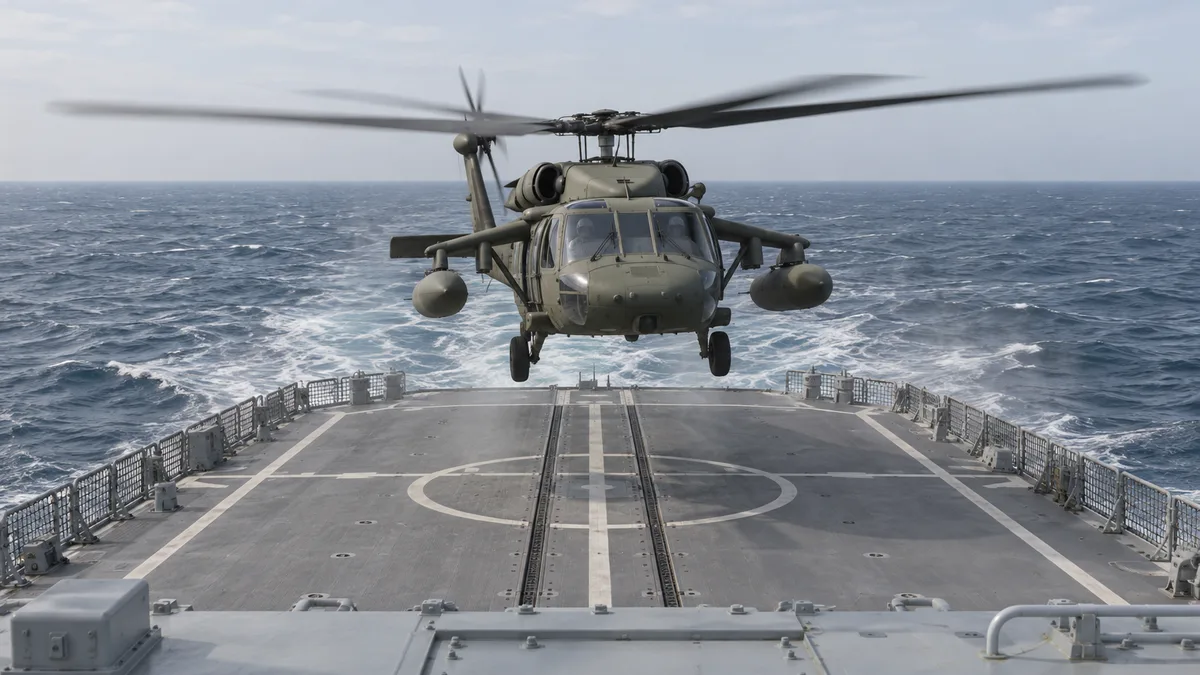
AI-generated illustration of a UH-60 helicopter hovering over a moving ship’s stern flight deck, viewed from the hangar.
AI-generated illustration of a UH-60 over a moving flight deck. The UH-60A is the aircraft I modeled in my research.

Current direction

What happens after the technology works

The question I keep returning to is what it takes for promising technology to move from R&D into adoption and scale: who owns the problem, who pays for it, and where the practical barriers remain.

Defense and dual-use technology

I’ve worked on the front end of government R&D: identifying opportunities, shaping the technical concept, and leading proposals. At Haas I’m learning the other half: how capabilities are bought, integrated, and fielded.

Autonomous and complex physical systems

I’ve worked on flight dynamics, controls, and design optimization for adaptive aircraft. I’m interested in where those meet autonomy, software, and real-world deployment.

Technology transition and adoption

As a co-founder, I completed NSF I-Corps customer discovery with my team at Berkeley, guided by program mentors, interviewing customers to test our assumptions. I’m still learning what stands between a working technology and adoption.

Background

From aerospace engineering to Haas

I did my PhD at the University of Michigan on shipboard helicopter operations, supported by the Office of Naval Research. I then worked in aerospace R&D and business development on rotorcraft, fixed-wing aircraft, UAVs, and advanced air mobility concepts for government and commercial customers.

Engineering and business development taught me the technical and government-contracting sides. At Haas I’m aiming to broaden my perspective on the rest: customer need, product, organization, and what it takes for promising technology to move into adoption and scale.

Elected member, Vertical Flight Society Modeling & Simulation Technical Committee

Research

Selected papers